Transforming Fraud Detection in Banking with Explainable AI : Enhancing Transparency and Trust
DOI:
https://doi.org/10.51903/jtie.v4i2.267Keywords:
Explainable AI , Machine Learning, Fraud Detection, Customer trust , Banking SecurityAbstract
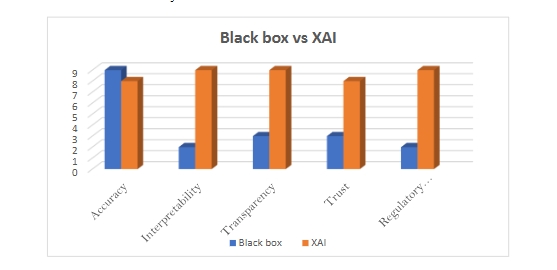
As financial fraud grows in complexity, banks are turning to artificial intelligence (AI) to identify and avert fraudulent actions. Nevertheless, the conventional black-box AI models often lack clarity, leading to issues related to trust, adherence to regulations, and customer assurance. This paper investigates the function of Explainable AI (XAI) in revolutionizing fraud detection in the banking industry by connecting algorithmic clarity with stakeholder confidence. We analyze how XAI improves fraud detection systems by making AI-generated decisions more understandable for regulators, auditors, and customers while preserving high levels of detection accuracy. By promoting transparency, accountability, and trust, XAI is transforming the financial sector’s strategy for addressing fraud. Traditional rule-based systems are no longer sufficient due to the growing complexity of hackers, which is why banks are adopting AI-driven and machine learning solutions. However, many sophisticated models' opacity presents serious difficulties for risk management and regulatory compliance. This gap is filled by explainable AI, which offers insights into decision-making processes and produces outputs that are easy to understand without sacrificing predictive ability. Integrating XAI into fraud detection systems becomes crucial as customers want more comfort regarding the handling of their financial data and regulatory bodies demand greater responsibility. This report emphasizes how important XAI is to improving operational resilience and bolstering consumer and bank trust.
References
Adadi, A., & Berrada, M. (2018). Peeking Inside the Black-Box: A Survey on Explainable Artificial Intelligence (XAI). IEEE Access, 6, 52138–52160. https://doi.org/10.1109/access.2018.2870052
Agudo, B. D., Aha, D., & Garcia, J. R. (2018). Case-Based Reasoning Explanation Intelligent Systems (XCBR). In Proceedings of ICCBR, 1st Workshop.
Ahmadi, S. (2025). Real-Time Applications of Explainable AI (XAI). SSRN Electronic Journal. https://doi.org/10.2139/ssrn.12345678
Ahmed, S., Phung, D., Adams, B., & Venkatesh, S. (2016). Anomaly Detection in Banking Transactions Using Deep Autoencoders. In Proceedings of the 22nd ACM SIGKDD International Conference on Knowledge Discovery and Data Mining (pp. 63–71). ACM. https://doi.org/10.1145/2939672.2939730
Awosika, T., Shukla, R. M., & Pranggono, B. (2023). Transparency and Privacy: The Role of Explainable AI and Federated Learning in Financial Fraud Detection. arXiv Preprint arXiv:2312.13334. https://arxiv.org/abs/2312.13334
Bhat, S., Gupta, D., & Kumar, V. (2021). Explainable Artificial Intelligence: A Critical Review of Its Implementation in Financial Fraud Detection. Financial Innovation, 7(1), 32. https://doi.org/10.1186/s40854-021-00250-z
Buczak, A. L., & Guven, E. (2016). A Survey of Data Mining and Machine Learning Methods for Cyber Security Intrusion Detection. IEEE Communications Surveys & Tutorials, 18(2), 1153–1176. https://doi.org/10.1109/comst.2015.2494502
Chakraborty, C., & Joseph, A. (2017). Machine Learning at Central Banks. Bank of England Staff Working Paper No. 674. https://doi.org/10.2139/ssrn.3083815
Chen, T., & Guestrin, C. (2016). XGBoost: A Scalable Tree Boosting System. In Proceedings of the 22nd ACM SIGKDD International Conference on Knowledge Discovery and Data Mining (pp. 785–794). ACM. https://doi.org/10.1145/2939672.2939785
Dal Pozzolo, A., Boracchi, G., Caelen, O., Alippi, C., & Bontempi, G. (2018). Credit Card Fraud Detection: Realistic Modeling and a Novel Learning Strategy. IEEE Transactions on Neural Networks and Learning Systems, 29(8), 3784–3797. https://doi.org/10.1109/tnnls.2017.2736643
Department of Justice. (2021, February). Credit Suisse Group of Switzerland Was Fined $536 Million. Office of Public Affairs (OPA). https://www.justice.gov/opa/pr/credit-suisse-agrees-forfeit-536-million-connection-violations-international-emergency
Doshi-Velez, F., & Kim, B. (2017). Towards a Rigorous Science of Interpretable Machine Learning. arXiv Preprint arXiv:1702.08608. https://arxiv.org/abs/1702.08608
Giudici, P., & Raffinetti, E. (2021). Shapley-Lorenz Explainable Artificial Intelligence for Credit Risk and Financial Fraud Detection. Journal of the Operational Research Society, 72(12), 2795–2808. https://doi.org/10.1080/01605682.2021.1875667
Goodfellow, I., Bengio, Y., & Courville, A. (2016). Deep Learning. MIT Press. http://www.deeplearningbook.org/
Gunning, D. (2018). Explainable Artificial Intelligence (XAI). Defense Advanced Research Projects Agency (DARPA). Retrieved June 6, 2018, from http://www.darpa.mil/program/explainable-artificial-intelligence
Irofti, P., Pătraşcu, A., & Băltoiu, A. (2021). Fraud Detection in Networks. In Studies in Computational Intelligence (pp. 517–536). Springer. https://doi.org/10.1007/978-3-030-52067-0_23
Li, K., Yang, T., Zhou, M., Meng, J., Wang, S., Wu, Y., Tan, B., Song, H., Pan, L., Yu, F., Sheng, Z., & Tong, Y. (2024). SEFraud: Graph-Based Self-Explainable Fraud Detection via Interpretative Mask Learning. arXiv Preprint arXiv:2406.11389. https://arxiv.org/abs/2406.11389
Lokanan, M. E. (2019). Data Mining for Statistical Analysis of Money Laundering Transactions. Journal of Money Laundering Control, 22(4), 753–763. https://doi.org/10.1108/JMLC-03-2019-0024
Lundberg, S. M., & Lee, S. (2017). A Unified Approach to Interpreting Model Predictions. Advances in Neural Information Processing Systems, 30, 4765–4774. https://doi.org/10.48550/arxiv.1705.07874
Miller, T., Howe, P., & Sonenberg, L. (2017). Explainable AI: Beware of Inmates Running the Asylum. In Proceedings of IJCAI Workshop on Explainable AI (XAI) (pp. 36–42). https://doi.org/10.48550/arXiv.1712.00547
Ngai, E. W. T., Hu, Y., Wong, Y. H., Chen, Y., & Sun, X. (2011). The Application of Data Mining Techniques in Financial Fraud Detection: A Classification Framework and an Academic Review of Literature. Decision Support Systems, 50(3), 559–569. https://doi.org/10.1016/j.dss.2010.08.006
Nobel, S. M. N., Sultana, S., Singha, S. P., Chaki, S., Mahi, M. J. N., Jan, T., Barros, A., & Whaiduzzaman, M. (2024). Unmasking Banking Fraud: Unleashing the Power of Machine Learning and Explainable AI (XAI) on Imbalanced Data. Information, 15(6), 298. https://doi.org/10.3390/info15060298
Ribeiro, M. T., Singh, S., & Guestrin, C. (2016). Why Should I Trust You? Explaining the Predictions of Any Classifier. In Proceedings of the 22nd ACM SIGKDD International Conference on Knowledge Discovery and Data Mining (pp. 1135–1144). ACM. https://doi.org/10.1145/2939672.2939778
Suman, R. R., Mall, R., Sukumaran, S., & Satpathy, M. (2010). Extracting State Models for Black-Box Software Components. Journal of Object Technology, 9(3), 79–103. https://www.jot.fm/issues/issue_2010_05/article4.pdf
Vivek, Y., Ravi, V., Mane, A. A., & Naidu, L. R. (2022). Explainable Artificial Intelligence and Causal Inference Based ATM Fraud Detection. arXiv Preprint arXiv:2211.10595. https://arxiv.org/abs/2211.10595
Wang, H., & Xu, Y. (2022). Explainable AI in Financial Fraud Detection: A Review and Future Directions. Journal of Financial Technology, 5(3), 101–120. https://doi.org/10.1016/j.fintech.2022.101120
Weld, D. D., & Bansal, G. (2018). The Challenge of Crafting Intelligible Intelligence. arXiv Preprint arXiv:1803.04263. https://arxiv.org/abs/1803.04263
Zhang, Y., Jin, Z., & Xia, L. (2021). A Comparative Study of Machine Learning Models for Fraud Detection in Banking. Expert Systems with Applications, 178, 114983. https://doi.org/10.1016/j.eswa.2021.114983
Zhou, B., Khosla, A., Lapedriza, A., Oliva, A., & Torralba, A. (2016). Learning Deep Features for Discriminative Localization. In Proceedings of the IEEE Conference on Computer Vision and Pattern Recognition (CVPR) (pp. 2921–2929). IEEE. https://doi.org/10.1109/cvpr.2016.319
Downloads
Published
Issue
Section
License
Copyright (c) 2025 Sivaranjani S., Sudha S., Hassan S. Noorul

This work is licensed under a Creative Commons Attribution-ShareAlike 4.0 International License.