Evaluating Digital Transformation within Integration Limitations using Desk-Based Analytical Case Study
DOI:
https://doi.org/10.51903/jtie.v4i2.365Keywords:
Digital Transformation, Hybrid Records, Integration, Digital Divide, E-GovernmentAbstract
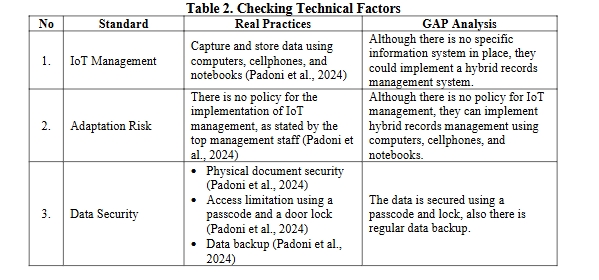
Digital transformation in developing regions frequently encounters challenges, including inadequate infrastructure, limited system integration, and uneven digital literacy. These constraints are especially significant in local government institutions where policy readiness and system interoperability remain low. This study evaluates the effectiveness of hybrid records management as a strategy for facilitating digital transformation, despite limitations in integration. A desk-based analytical case study was conducted on the M’mbelwa District Council in Malawi, using a mixed-method exploratory design. Qualitative analysis applied the TOE Framework, UTAUT/TAM, and the Records Continuum Model, while quantitative validation used the DeLone and McLean Information Systems Success Model. The findings show that, despite the absence of formal IoT policies, the council effectively utilized basic devices, such as computers, mobile phones, and notebooks, for daily data recording and archival management. Staff capability was measured at 50 percent intermediate and 30 percent advanced, with 100 percent daily usage. Security measures included passcode protection and regular backups. Quality scores reached 4.5 out of 5 for information relevance and 4.3 out of 5 for user satisfaction, while efficiency improved by about 25 percent. The archives lifecycle, covering creation, capture, organization, and transfer to the National Archives, was implemented effectively, although disposal procedures were absent. This study demonstrates that hybrid records management can bridge the digital divide and sustain public services in low-resource contexts. The results make theoretical contributions to the digital transformation literature and provide practical guidance for policymakers facing similar infrastructural and policy challenges.
References
Abuzanjal, A., & Bashir, H. (2024). Service Innovation Challenges in UAE Government Entities: Identification and Examination of the Impact of Organizational Size and Excellence Model Implementation. Journal of Open Innovation: Technology, Market, and Complexity, 10(3), 100364. https://doi.org/10.1016/j.joitmc.2024.100364
Al-Ansi, A. M., Garad, A., Jaboob, M., & Al-Ansi, A. (2024). Elevating E-Government: Unleashing the Power of AI and IoT for Enhanced Public Services. Heliyon, 10(23), e40591. https://doi.org/10.1016/j.heliyon.2024.e40591
Ali, N., Mustaffa, M. M., Alkawsi, G., & Capretz, L. F. (2024). If You Build it, Will They Come? Exploring the Success Factors of Knowledge Management Systems in the Malaysian Public Sector. Heliyon, 10(6), 2405–8440. https://doi.org/10.1016/j.heliyon.2024.e27093
Blouin, D., Bissonnette, J. F., Goyette, J. O., Cimon-Morin, J., Mendes, P., Torchio, G. M., Gosselin-Tapp, J., & Poulin, M. (2025). Ecosystem Services Concept: Challenges to Its Integration in Government Organizations. Ecosystem Services, 71, 101691. https://doi.org/10.1016/j.ecoser.2024.101691
Chang, Y. W., & Chen, J. (2025). An Empirical Investigation of Critical Success Factors in Implementing Digital Transformation. Technological Forecasting and Social Change, 217, 124161. https://doi.org/10.1016/j.techfore.2025.124161
Chen, Y., & Chen, Z. (2024). Can E-Government Online Services Offer Enhanced Governance Support? A National-Level Analysis Based on FsQCA and NCA. Journal of Innovation & Knowledge, 9(3), 100526. https://doi.org/10.1016/j.jik.2024.100526
Dash, B., Sharma, P., & Swayamsiddha, S. (2023). Organizational Digital Transformations and the Importance of Assessing Theoretical Frameworks such as TAM, TTF, and UTAUT: A Review. International Journal of Advanced Computer Science and Applications, 14(2), 1–6. https://doi.org/10.14569/ijacsa.2023.0140201
DeLone, W. H., & McLean, E. R. (2003). The DeLone and McLean Model of Information Systems Success: A Ten-Year Update. Journal of Management Information Systems, 19(4), 9–30. https://doi.org/10.1080/07421222.2003.11045748
Ding, T., & Yang, L. (2025). Intellectual Property Protection and Corporate Digital Transformation: An Empirical Analysis from the Perspectives of Intellectual Property Protection and Digital Governance. International Review of Economics & Finance, 100, 104125. https://doi.org/10.1016/j.iref.2025.104125
Harrington, L., Price, K., & Edmonds, P. (2020). From Paper to Paperless: Do Electronic Systems Ensure Safe and Effective Communication and Documentation of DNACPR Decisions? Clinical Medicine, 20(3), 329–333. https://doi.org/10.7861/clinmed.2019-0450
Li, J., Wang, T., Ma, C., Lin, Y., & Yan, Q. (2025). A file Archival Integrity Check Method Based on the BiLSTM + CNN Model and Deep Learning. Egyptian Informatics Journal, 29, 100597. https://doi.org/10.1016/j.eij.2024.100597
Loconte, D., Ieva, S., Pinto, A., Loseto, G., Scioscia, F., & Ruta, M. (2024). Expanding the Cloud-to-Edge Continuum to the IoT in Serverless Federated Learning. Future Generation Computer Systems, 155, 447–462. https://doi.org/10.1016/j.future.2024.02.024
Malik, M., Andargoli, A., Pala, K., & Tortorella, G. L. (2025). Towards Explaining the Effects of the Human-Technology Dynamic on Human Agency in Digital Transformations. International Journal of Information Management, 84, 102915. https://doi.org/10.1016/j.ijinfomgt.2025.102915
Morabito, G., Sicari, C., Ruggeri, A., Celesti, A., & Carnevale, L. (2023). Secure-by-Design Serverless Workflows on the Edge–Cloud Continuum Through the Osmotic Computing Paradigm. Internet of Things, 22, 100737. https://doi.org/10.1016/j.iot.2023.100737
Mphahlele, N. S., Kekwaletswe, R. M., & Seaba, T. R. (2025). Model to Explain Use of E-Government Service Change: Use of Unified Theory of Acceptance and Use of Technology and Information Systems Success Model to Explain Use of E-Government Service Change: Emerging Market Case. Telematics and Informatics Reports, 17, 100190. https://doi.org/10.1016/j.teler.2025.100190
Muhammad, S. S., Dey, B. L., Kamal, M. M., Samuel, L., & Alzeiby, E. A. (2025). Digital Transformation or Digital Divide? SMES’ Use of AI During Global Crisis. Technological Forecasting and Social Change, 217, 124184. https://doi.org/10.1016/j.techfore.2025.124184
Oztaskin, H. S., Iyit, N., & Alkan, O. (2024). Citizen Attitudes Towards E-Government Services during the COVID-19 Pandemic: A Case in Türkiye. Heliyon, 10(15), 2405–8440. https://doi.org/10.1016/j.heliyon.2024.e35041
P. Senna, P., Barros, A. C., Bonnin Roca, J., & Azevedo, A. (2023). Development of a Digital Maturity Model for Industry 4.0 Based on the Technology-Organization-Environment Framework. Computers & Industrial Engineering, 185, 109645. https://doi.org/10.1016/j.cie.2023.109645
Padoni, R. A., Chipeta, G. T., & Chawinga, W. D. (2024). Hybrid Records Management Practices at M’mbelwa District Council in Malawi. Social Sciences & Humanities Open, 10, 101130. https://doi.org/10.1016/j.ssaho.2024.101130
Pricopoaia, O., Cristache, N., Lupașc, A., & Iancu, D. (2025). The Implications of Digital Transformation and Environmental Innovation for Sustainability. Journal of Innovation & Knowledge, 10(3), 100713. https://doi.org/10.1016/j.jik.2025.100713
Schmitt, G., Mladenow, A., Strauss, C., & Schaffliauser-Linzatti, M. (2019). Smart Contracts and Internet of Things: A Qualitative Content Analysis using the Technology-Organization-Environment Framework to Identify Key-Determinants. Procedia Computer Science, 160, 189–196. https://doi.org/10.1016/j.procs.2019.09.460
Ullah, F., Qayyum, S., Thaheem, M. J., Al-Turjman, F., & Sepasgozar, S. M. E. (2021). Risk Management in Sustainable Smart Cities Governance: A TOE Framework. Technological Forecasting and Social Change, 167, 120743. https://doi.org/10.1016/j.techfore.2021.120743
Viontita, S. C., & Mahendrawathi, E. R. (2024). Evaluation of Surabaya Population Administration & Civil Registration Systems Using DeLone & McLean Information System Success Model. Procedia Computer Science, 234, 1154–1163. https://doi.org/10.1016/j.procs.2024.03.111
Xiong, Q., Yang, J., Zhang, X., Deng, Y., Gui, Y., & Guo, X. (2025). The Influence of Digital Transformation on the Total Factor Productivity of Enterprises: The Intermediate Role of Human-Machine Cooperation. Journal of Innovation & Knowledge, 10(4), 100736. https://doi.org/10.1016/j.jik.2025.100736
Zheng, Y. (2024). Research on Paperless College Examinations Based on iTEST Intelligent Testing and Assessment Cloud Platform. Procedia Computer Science, 247, 1381–1387. https://doi.org/10.1016/j.procs.2024.10.165
Downloads
Published
Issue
Section
License
Copyright (c) 2025 Setiawan Arkha Ade Nugroho, Agus Wibowo

This work is licensed under a Creative Commons Attribution-ShareAlike 4.0 International License.